ChatGPT for Investing 2026: A 5-Step Workflow and 6 Prompts
By Alpesh Patel OBE, Founding Principal of Rootbridge Capital and author
ChatGPT is a good research assistant for investing, but it is a poor stock picker. Use it to explain jargon, summarise annual reports, list the risks in a company, stress-test your reasons for buying and check your portfolio against your own rules. Don't use it to tell you what to buy, to quote live prices, or to replace a repeatable investing process. Always check any number it gives you against the original source.
More and more investors are asking ChatGPT for help. That makes sense: it's free, it's fast, and it never gets bored of your questions. But a tool that sounds confident is not the same as a tool that is right. Here is how to get real value from it without falling into the traps.
Can ChatGPT pick stocks?
Not reliably. ChatGPT is a large language model: it is built to produce plausible-sounding text, not to forecast share prices. Ask it for "the best shares to buy now" and you'll usually get a list of well-known, already-popular companies, plus a polite warning that it can't give financial advice.
The bigger risks are:
- It can make up numbers. AI models sometimes state figures, dates or ratios that are simply wrong, and say them with total confidence. This is often called "hallucination".
- Its data may be stale. Depending on the version and settings, it may not have today's prices or the latest results. Even with web search switched on, it can misread or mix up sources.
- It has no process. It doesn't know your goals, your time horizon or how much you could lose without panicking, and it won't apply the same rules consistently every time you ask.
I've written more on this ChatGPT and stock picking: hype or a hedge fund secret weapon? (opens in a new tab)
What is ChatGPT actually good for in investing?
| Task | Good use of ChatGPT? | Why |
|---|---|---|
| Explaining jargon (ROCE, PEG, drawdown) | Yes | Clear, patient explanations at your level |
| Summarising an annual report you paste in | Yes | Fast first read, if you check key figures |
| Listing a company's risks | Yes | Good at "what could go wrong?" thinking |
| Stress-testing your reasons to buy | Yes | Argues the other side without ego |
| Building a spreadsheet formula | Yes | Saves hours on Sharpe, Sortino, CAGR maths |
| Quoting live prices or ratios | No | Can be stale or simply wrong |
| Telling you what to buy | No | No process, no accountability, no knowledge of you |
| Timing the market | No | Nobody can do this reliably, AI included |
How to use ChatGPT for investing: a 5-step workflow
- Start with your rules, not the AI. Write down what you're looking for before you open ChatGPT: for example, profitable companies with low debt, strong historic returns for the risk taken, and reasonable value. The AI should serve your process, not replace it.
- Use a screener to find candidates. Use proper screening software or your platform's screener to find shares that meet your rules, with real data. ChatGPT is not a data source.
- Paste in primary sources. Copy the relevant parts of the company's latest annual report or results statement into ChatGPT and ask it to summarise them. Working from a document you supplied cuts the risk of invented facts.
- Ask it to argue against you. Ask: "What are the three strongest reasons NOT to buy this share?" Good investors look for what would prove them wrong.
- Check, then decide yourself. Verify every important number against the original document, and make the final decision against your written rules, not because the chatbot sounded convincing.
ChatGPT prompts for investing that actually help
Copy these and replace the brackets:
- Jargon: "Explain [return on capital employed] to me as if I'm a sensible beginner. Give a simple example with round numbers."
- Annual report: "Here is the strategic report from [company]'s latest annual report. Summarise the business, how it makes money, its biggest risks and what management says about the next year. Quote the page or section for every figure."
- Bear case: "I'm thinking of buying [company]. Act as a sceptical fund manager and give me the strongest case against it."
- Portfolio check: "Here are my holdings and their weightings: [list]. Which sectors and countries am I most exposed to? Where am I concentrated?"
- Spreadsheet help: "Write an Excel formula to calculate the Sortino ratio from a column of monthly returns in B2:B61, with a target return of 0%."
- Behaviour check: "My portfolio is down 15%. Here are my original reasons for buying each share: [list]. Which of those reasons have actually changed?"
Notice what's missing: "What should I buy?" That's the one question it can't answer for you.
The biggest mistakes people make investing with ChatGPT
- Trusting the numbers. Treat every figure as a draft until you've checked it.
- Asking for tips. You'll get the same popular names everyone else gets, usually after they've already risen.
- Changing your mind every time you ask. Ask the same question twice and you may get a different answer. A process gives you the same answer every time.
- Forgetting it isn't regulated. A chatbot is not an authorised financial adviser and isn't accountable if it's wrong.
- Pasting in private data. Don't share account numbers, passwords or personal details.
Why a process beats a prompt
There's no crystal ball, human or artificial. What works is a repeatable process: clear rules for what you buy, how much you put in each holding and what makes you sell, applied the same way every time.
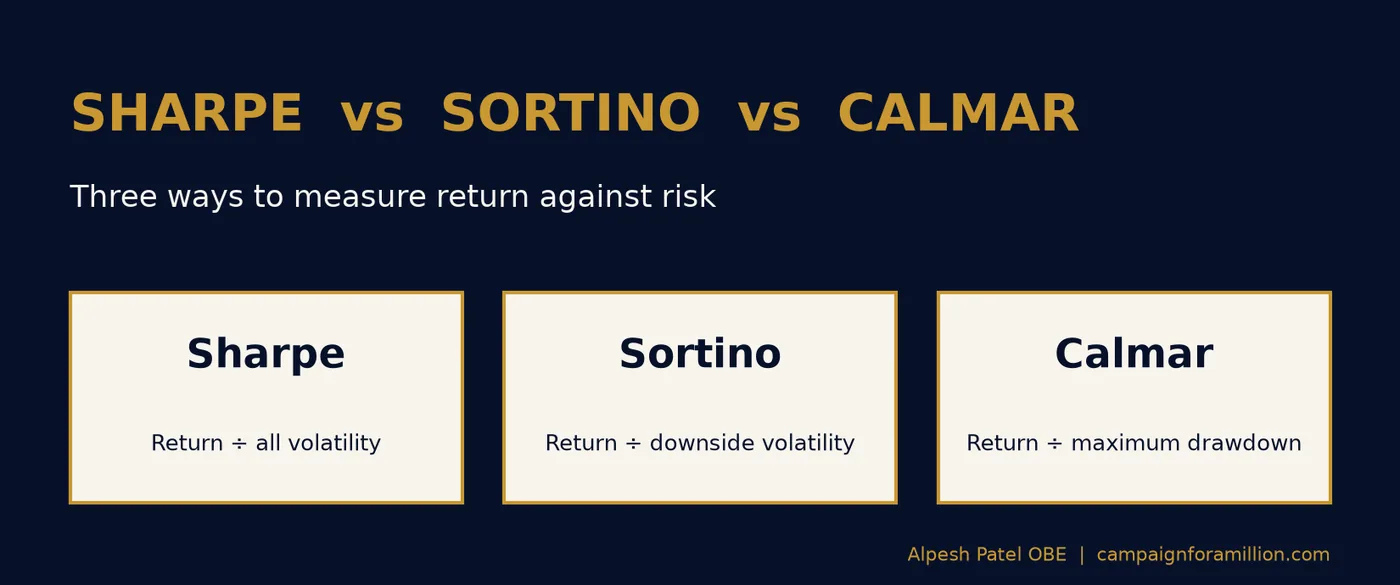
On the Great Investments Programme, that's what we teach. We use screening software and measures like the Sharpe, Sortino and Calmar ratios to find candidates, then apply the same rules every time. AI is a useful assistant in that process, not the process itself.
For a wider look at where AI helps long-term investors, read AI investing: what actually works (opens in a new tab). You can also see the live picks we've actually given clients (not backtests) at shares.alpeshpatel.com.
Frequently asked questions
Is it safe to use ChatGPT for investing?
It's safe as a research and learning tool, as long as you verify its facts and make your own decisions. It isn't safe as a source of buy and sell recommendations.
Can ChatGPT give real-time stock prices?
Sometimes, if web search is available and switched on, but it can still pull the wrong figure or an old one. Use your broker, platform or a market data site for prices.
Is ChatGPT financial advice?
No. ChatGPT is not authorised by the Financial Conduct Authority and does not know your full circumstances. Its answers are general information.
What's the best AI tool for investing?
The best tool is the one that supports a clear process. A good screener with reliable data, plus an AI assistant for reading and summarising, beats any single "AI stock picker".
Can ChatGPT build me a portfolio?
It can suggest a generic mix, but it won't size positions to your goals, risk capacity and time horizon, or tell you when to rebalance. That's what a process is for.
Want a process instead of a prompt?
Book a call with my team. We'll look at how you pick investments now, what you hold, and whether the Great Investments Programme makes sense for you.
Important: This article is for education only and is not personal financial advice. This is general investment education only and is not regulated investment advice. The value of investments can go down as well as up, and you may get back less than you invest. Past performance is not a reliable indicator of future results. ChatGPT is a trademark of OpenAI; this article is not affiliated with or endorsed by OpenAI.
Important: this article is education and information only. It is not financial advice or a personal recommendation, and it does not take your circumstances into account. The value of investments and pensions can fall as well as rise, and you may get back less than you put in. Past performance is not a reliable indicator of future results. Figures were correct when the article was written and may have changed. If you are unsure what is right for you, speak to a regulated financial adviser.