Buy the Dip or Wait? Why I Check the Market Climate First

Based on my webinar of 27 November 2026. Market commentary reflects that webinar, not live prices or forecasts.
Markets bounced last week, and the same question landed in my inbox many times over: is this the dip to buy, or is there more to fall?
I don't know. Nor does anyone else. What I do have is a process for deciding what to do when I don't know, and that is what I walked through in Friday's webinar.
Watch the webinar
Watch on YouTube (opens in a new tab).
Climate and weather
I look at two things on a chart: the monthly trend, which I call the climate, and the weekly trend, which I call the weather. The climate matters more.
In summer it can still rain. In December you can still get a warm afternoon. Neither changes the season. So when the weekly picture improves while the monthly one is still falling, I treat it with suspicion. As I said on Friday:
If the weather is good when the climate is bad, it won't last.
Usually, that is. It is a rule of thumb, not a law. But it stops me from getting excited too early and piling in on the first good week after a fall.
You can see the current reading for eight major markets on my Market Regime page.
Two shapes of fall
Falls come in two broad shapes, and I described them this way:
U-shaped is long and deep. V is short and deep.
Nobody can tell you in advance which one you are in. That is exactly why I don't rush. If I'm slow and the market recovers quickly, I buy a little later than I might have. If I'm early and the fall turns out to be the long kind, I have spent my cash before the better prices arrived.
My own approach is to wait until the monthly average has stopped falling and the weekly one has turned up, and only then top up or rebalance. That is what I do with my own money. It is not an instruction for yours.
A lower price is not a reason
I showed the four-week sector map in the session, with some well-known companies down sharply. My view is that even a month is noise. I don't buy or sell something only because its price has moved a lot in four weeks.
What I ask instead is whether the company still passes the tests I used when I bought it: value, growth, income and cash flow. If it does, a lower price on a company I already like is more interesting to me than alarming. If it doesn't, the rule is short:
If in doubt, leave it out.
The sector map and the breadth and valuation charts I used are free to explore.
Why I cap every holding
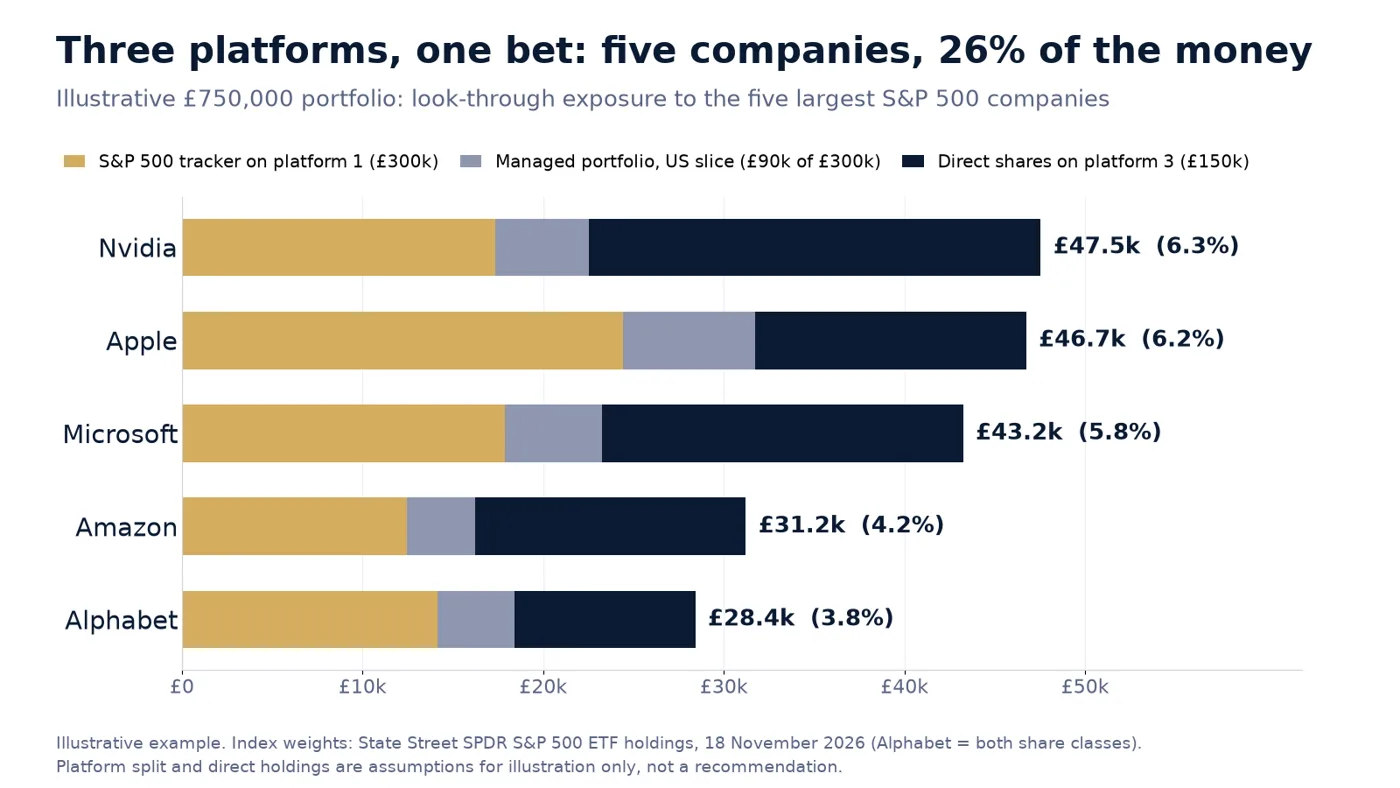
The other half of not panicking is portfolio construction. In the webinar I said I don't want more than 10% of my portfolio in any one stock, however much I like it. That limit applies when a favourite has fallen and looks tempting, and it applies when one has done so well that it has grown past the limit by itself.
If no single company can dominate your portfolio, no single company's bad month can dominate your mood. And a calm investor makes better decisions than a frightened one.
Start with the fall, not the gain
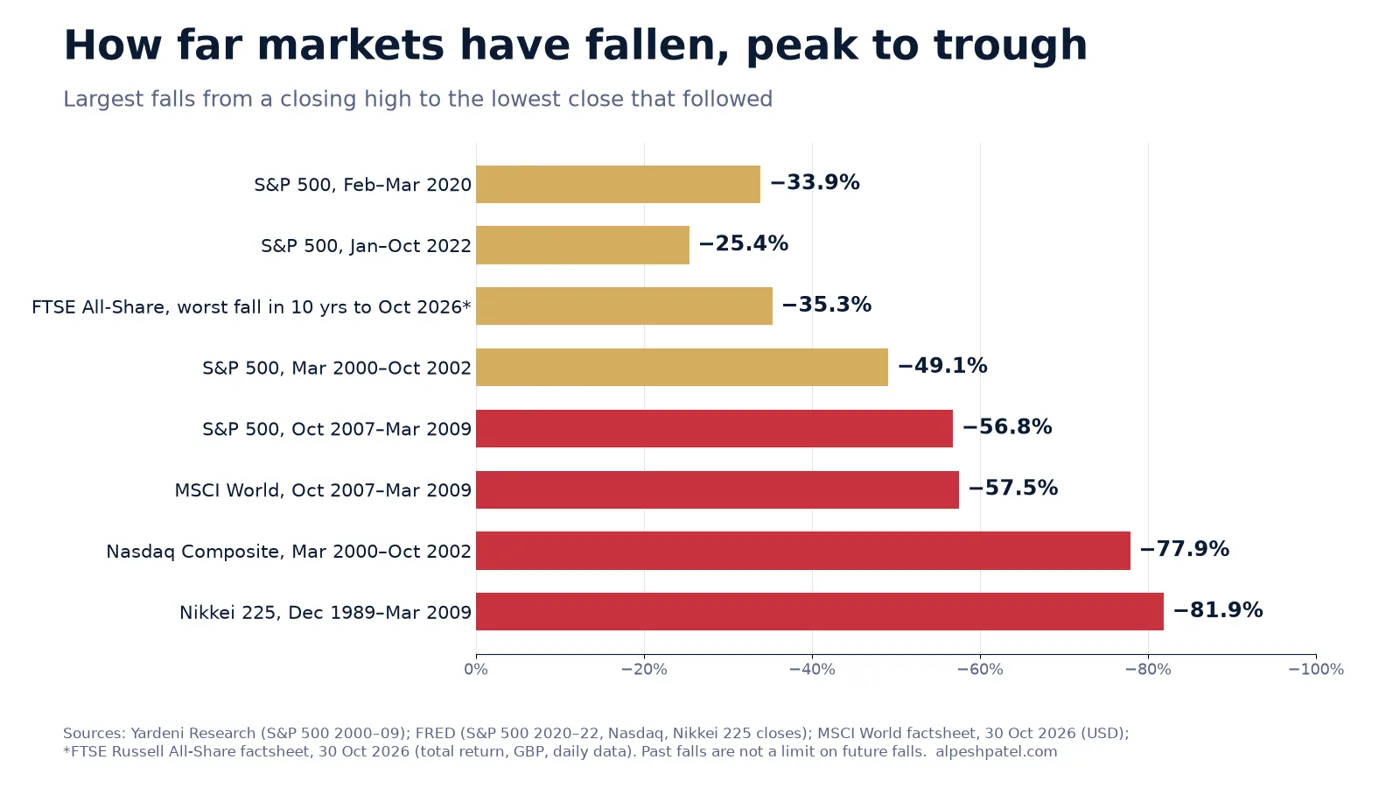
Before asking how much something might make, I ask how far it has fallen in the past and whether I could have lived with that. Some of the best-performing companies of the past decade had falls along the way that most people would find very hard to sit through.
History does not tell you what happens next. It does tell you what you would have needed to tolerate, and whether a holding fits your risk capacity. My free tools and calculators let you explore this with your own numbers.
Five questions before you buy a dip
- What is the climate? Is the longer trend still falling, flat or rising?
- Why this company? Can you state the case in terms of value, growth, income and cash flow, without mentioning the recent price move?
- How much do you already hold? Would buying more take any single holding past your limit?
- Could you live with a further fall? Look at how far it has dropped before.
- Do you have any doubt about the business? If so, leave it out.
Want a clearer investing process?
If you invest your own money and want a repeatable process for decisions like these, book a call with my team at www.alpeshpatel.com/call to talk through the Great Investments Programme and whether the education is right for you.
Important: this article is education and information only. It is not financial advice or a personal recommendation, and it does not take your circumstances into account. The value of investments and pensions can fall as well as rise, and you may get back less than you put in. Past performance is not a reliable indicator of future results. Figures were correct when the article was written and may have changed. If you are unsure what is right for you, speak to a regulated financial adviser.