Should I Move My Pension to Cash? Why It's the Wrong Question When a Quarter Sits in AI Giants
Picture someone with a large pension in a global managed fund. The pot has done well, and they have a clear target: about £3 million. Then they look at the fund's top holdings and see the same names over and over. Apple. Nvidia. Microsoft. Amazon. Alphabet. Their instinct says: move my pension to cash before the AI story cracks. Their adviser says: stay invested.
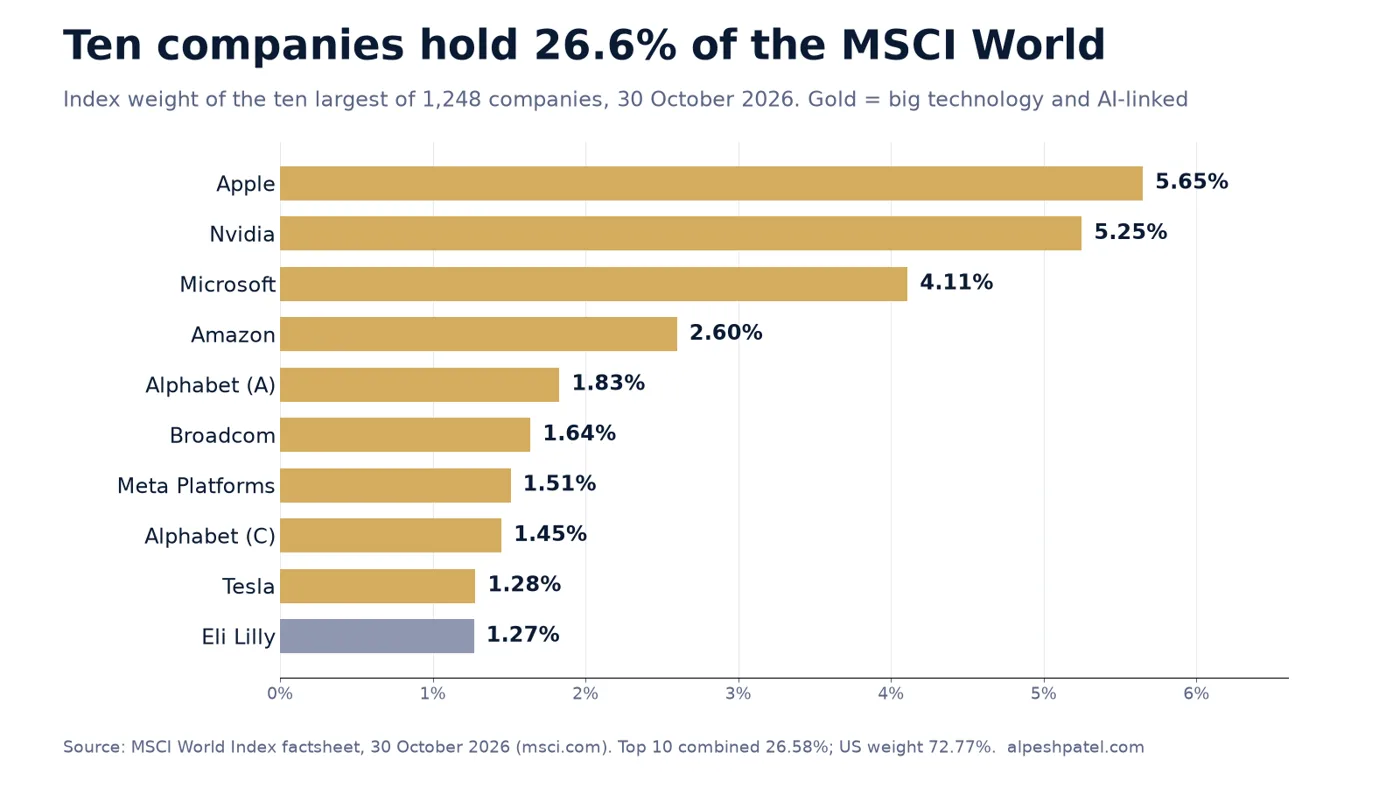
Both are partly right, and that is the problem. If your pension tracks or resembles the MSCI World index, nine big technology and AI-linked companies made up 25.3% of it on 30 October 2026, and the top ten made up 26.58%, according to the MSCI World Index factsheet (opens in a new tab). That is about a quarter of a "global" fund that holds 1,248 companies.
So the worry is real. But "should I move my pension to cash?" offers only two answers, and neither fixes it. Going to cash throws away the growth the target depends on. Staying put leaves a concentration you never chose. There is a third way, and it starts with asking a better question.
Short answer: Moving your whole pension to cash, or doing nothing, is a false choice. A middle path works better: hold in cash only what you will need in the next two years, so a fall never forces you to sell; reduce any concentration you never chose, rather than leaving the market; and write down now the rules for cutting and adding risk.
Worried about how much of your pension rides on a few AI giants? Book your free call with Alpesh's team. We will show you how self-directed investors check concentration, set a cash buffer and write rules for when to act. There is nothing to buy on the call.
Should I move my pension to cash?
For most people with years of investing still ahead, moving everything to cash is a decision about fear rather than a plan. It feels safe because the number on the screen stops moving. But a pension aiming to double needs growth, and cash rarely provides enough of it.
Look at today's numbers. The Bank of England raised Bank Rate to 4% on 5 November 2026 (Bank of England (opens in a new tab)), and UK consumer price inflation was 3.6% in the year to October 2026 (ONS (opens in a new tab)). Even if your pension's cash fund paid close to Bank Rate, which many do not, that leaves very little real growth. Doubling a pot on that is a very long wait.
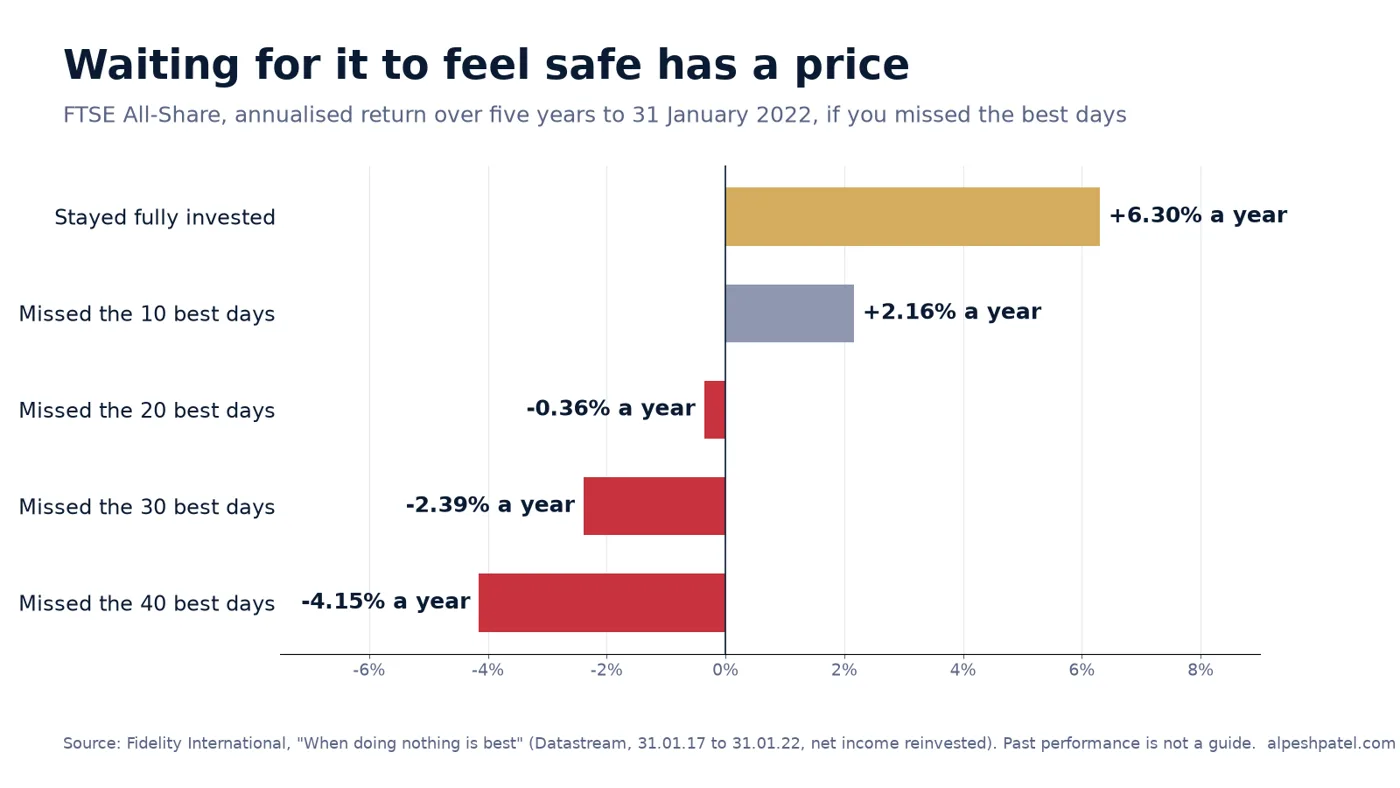
The bigger cost is getting back in. Going to cash is two decisions, not one: when to leave and when to return. Morningstar's Mind the Gap study found the average US fund investor earned 8.7% a year over the ten years to 31 December 2025, against 9.9% a year for the funds themselves, largely because of the timing of their buying and selling (Morningstar (opens in a new tab)). That is 1.2 percentage points a year lost to moving in and out at the wrong moments.
What does history say about selling after a fall?
The awkward truth is that the worst years and the best years tend to sit close together. Here is the MSCI World on its own factsheet.
| MSCI World (gross returns, US dollars) | Figure |
|---|---|
| Worst fall, 31 October 2007 to 9 March 2009 | −57.46% |
| 2022 | −17.73% |
| 2023, the year after | +24.42% |
| 2018 | −8.20% |
| 2019, the year after | +28.40% |
Source: MSCI World Index factsheet (opens in a new tab), 30 October 2026. Past performance is not a reliable indicator of future results.
Someone who moved to cash at the end of 2022 locked in the fall and then missed the rebound. That is the trap. The fall that scares you into cash is often followed by the rise that would have repaired the damage.
A 57% fall did happen, so falls are real. The answer is to make sure a fall cannot hurt you in the ways that matter, not to guess its date.
Is my pension too concentrated in AI stocks?
This is the right worry, and it is a different worry from "the market will crash". A global fund is meant to spread your money across the world. Yet the MSCI World was 72.77% in US companies and 29.84% in information technology on 30 October 2026 (MSCI (opens in a new tab)).
Source: MSCI World Index factsheet, 30 October 2026.
Nobody sat down and decided that a quarter of your retirement should depend on nine companies and one theme. It happened because those companies grew faster than the rest, and an index weights companies by size. The fund did exactly what it was designed to do. That is why the concentration is a choice you inherited rather than one you made.
I have covered whether the Magnificent Seven should worry you and the AI stocks sell-off elsewhere. The point here is narrower: you can change your fund's concentration without leaving the market.
The middle path: three steps instead of one leap
Here is how the three options compare.
| Move it all to cash | Stay exactly as you are | The middle path | |
|---|---|---|---|
| Protects near-term spending | Yes | No | Yes |
| Keeps long-term growth | No | Yes | Yes |
| Deals with the AI concentration | Yes, by leaving everything | No | Yes, by choice |
| Needs a decision to get back in | Yes | No | No |
| Gives you rules for the next fall | No | No | Yes |
Illustrative comparison, not a recommendation.
Step 1: Hold in cash only what you need in the next two years
The real danger in a crash is not the fall on paper. It is being forced to sell at the bottom because you need the money. So work out what you will actually draw from the pension in the next two years: income, tax-free cash, a planned gift or a big purchase.
In an illustrative example, someone drawing £60,000 a year from a £1.5 million pension would hold about £120,000 in cash, or 8% of the pot. Someone still working who plans no withdrawals for years may need little or none. The rest stays invested and has time to recover from a fall.
This gives cash a job rather than making it a hiding place. A fall can never make you sell, because the next two years are already paid for. In good years you top the buffer up; in bad years you spend it and leave the investments alone. The build a retirement income guide covers how to run this in drawdown.
Step 2: Look at the concentration, not the market
Reducing a concentration you never chose is a very different act from leaving the market. You stay invested in shares. You simply decide how much of your pension should depend on a handful of giant technology companies, instead of letting the index decide for you.
Start by finding out what you hold. Your fund's factsheet lists its top ten holdings and its country and sector weights. Add them up. If a quarter of your money sits in the same few names, ask whether that is the weight you would choose if you were building the portfolio from scratch today.
If it is not, there are many ways to rebalance without going to cash: adding other regions, smaller companies, funds that weight companies differently, or bonds, each sized to your own risk. Inside a UK pension, switching between funds does not usually trigger tax, though your scheme's dealing costs and fund range will set what is practical. The aim is a mix you chose, with each part sized on purpose.
Step 3: Write your rules down now, while you are calm
Decide what you will do in a crash before it happens. Written rules stop you making the biggest decision of the decade on the worst day of the year.
You need two rules, not one. The first says what fall would make you reduce risk. The second, which most people forget, says what would make you add risk back. Without the second rule, a cautious move becomes a permanent exit and you are back in the cash trap.
| Illustrative rule | Example wording |
|---|---|
| Reduce risk | "If my pension falls 20% from its high and the long-term trend has turned down, I will move a set slice of the riskiest part into lower-risk holdings." |
| Add risk back | "When the long-term trend turns back up, I will return that slice in two stages a month apart." |
| Rebalance | "Once a year, or if any one holding goes above a set percentage of the pot, I will trim it back to target." |
| Cash buffer | "I will keep two years of planned withdrawals in cash and refill it only after a rising year." |
Illustrative examples of the format only. The thresholds are not recommendations; set your own to fit your risk and timeline.
My own process uses the trend on the monthly chart for the big picture and the weekly for timing, and I write the conditions down before I need them. You can follow the market backdrop on my market regime page and the Mag 6 watch, which tracks the largest US technology companies.
Can my pension still reach £3 million?
It depends on time and return, not on whether you hold cash this month. Doubling a pot in ten years needs about 7.2% a year after charges. In twelve years it needs about 5.9%. Those are illustrative calculations, not forecasts.
A modest cash buffer does not wreck that maths: in the illustrative example above, 8% in cash slows growth only slightly. Moving everything to cash and missing one rebound can cost far more.
To test your own numbers, use the free Pension Plan (opens in a new tab) tool for growth and withdrawals, Portfolio Odds (opens in a new tab) to explore the chance of a loss for a given mix under its assumptions, and the Probability (opens in a new tab) tool to see the range of outcomes. More are on the tools page.
What if my adviser says stay invested?
Your adviser may be right that you should stay invested. That is not the same as nothing changing. Three questions are worth asking them, or yourself if you run your own money.
What would I need from this pension in the next two years, and is it held somewhere a fall cannot touch? How much of my pot sits in the ten largest holdings, and did I choose that weight? What exactly would make us reduce risk, and what would make us add it back?
If the answers are vague, that is your real risk. A managed fund can be a sound home for money. But you cannot shape it around your own spending dates, your own limits or your own view of a theme. That is the case for managing your own money: control over the mix, transparency over every holding and charge, and a portfolio built for your risk rather than an average investor's. It works when you follow a written process for what to buy, how much and when to sell. The protect your portfolio in a crash and run your own SIPP guides set out the steps.
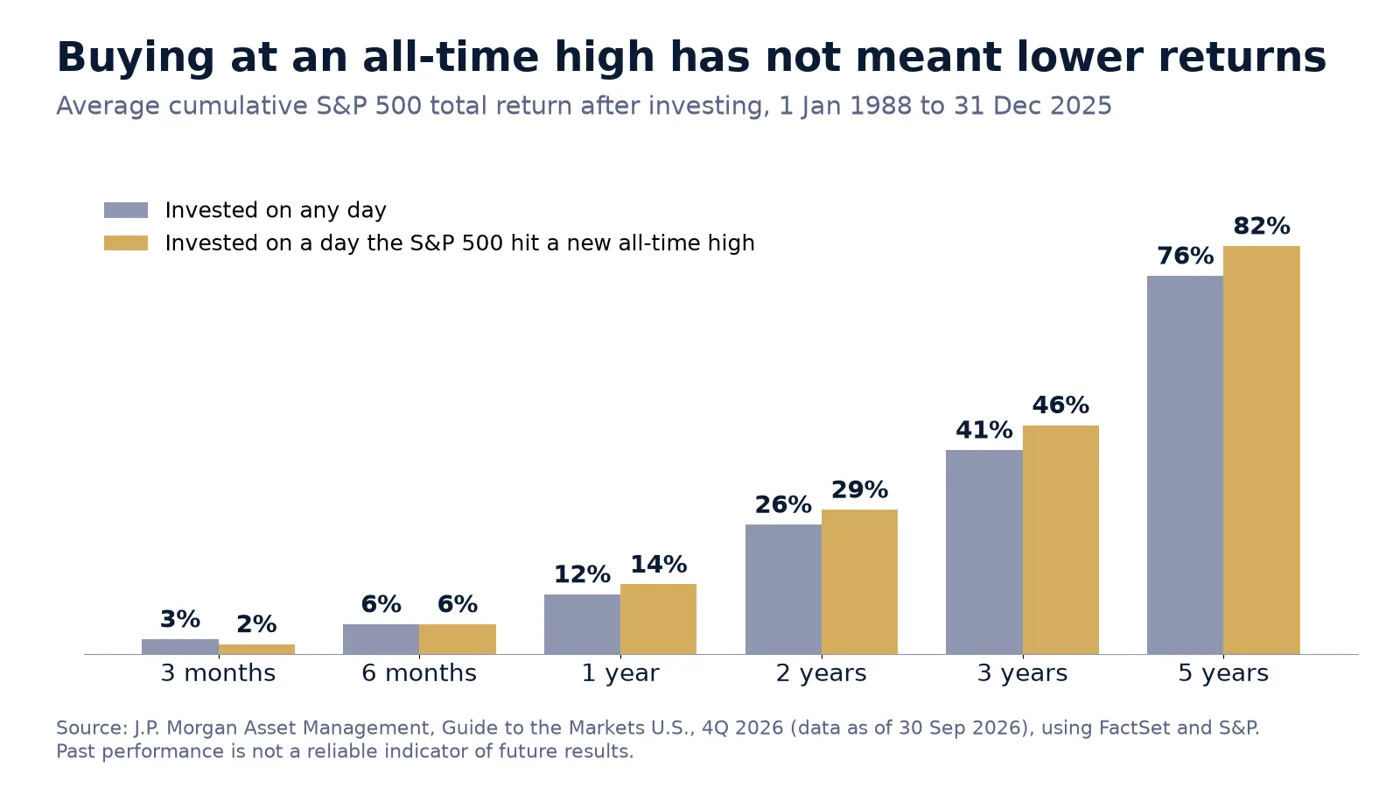
Related: Investing a lump sum at all-time highs.
What to do next
- Add up your next two years. List every withdrawal you expect from the pension and check how much is held in cash or near-cash today.
- Read your fund's factsheet. Note the top ten holdings, the US weight and the technology weight, and write down the weight you would choose instead.
- Write two rules. One for reducing risk and one for adding it back, with the trigger and the size of the move.
- Test the plan. Run your target through Pension Plan (opens in a new tab) and your mix through Portfolio Odds (opens in a new tab).
- Diarise a review. Pick a date to check the buffer and rebalance, so changes happen on your schedule rather than the market's.
Want a written plan for your pension that you would still follow in a crash? Book your free call with Alpesh's team. We will show you how self-directed investors size a cash buffer, deal with concentration and set rules for when to act, so the next fall finds you prepared. There is nothing to buy on the call.
Frequently asked questions
Is it a good idea to move my pension into cash?
Moving all of it rarely helps anyone with years of investing ahead, because cash grows slowly and you then have to decide when to get back in. Holding in cash what you will need in the next two years is a more targeted way to stop a fall forcing you to sell.
How much of my pension should be in cash?
A common approach is to hold enough to cover planned withdrawals for the next one to two years. Someone still working with no withdrawals planned may need little cash at all, while someone in drawdown may hold more. The right figure depends on your spending and risk.
Are global index funds too concentrated in tech?
On 30 October 2026 the ten largest companies made up 26.58% of the MSCI World and information technology made up 29.84%, according to MSCI. Whether that is too much is your decision, but you should know the figure and choose it rather than inherit it.
Will I pay tax if I switch funds inside my pension?
Switching between investments inside a UK registered pension does not usually create a tax charge, because gains inside the pension are not taxed. Your scheme may charge dealing costs or limit which funds you can use, so check before you switch.
About Alpesh Patel OBE
Alpesh Patel OBE is Founding Principal of Rootbridge Capital, an author and Dealmaker for the UK Government's Department for Business. He is a former Visiting Fellow in Business, Corpus Christi College, Oxford University, where he worked on technology to improve financial education.
Sources
- MSCI, MSCI World Index factsheet (opens in a new tab), 30 October 2026: top ten constituents, country and sector weights, annual returns and maximum drawdown
- Bank of England, Interest rates and Bank Rate: our latest decision (opens in a new tab)
- Office for National Statistics, Consumer price inflation, UK: October 2026 (opens in a new tab)
- Morningstar, Mind the Gap (opens in a new tab)
- Alpesh Patel OBE, The Cash Problem Most Investors Get Wrong (opens in a new tab) (YouTube)
Important: This article is for education only and is not personal financial advice or a recommendation to buy or sell any investment. This article is general investment education only and is not regulated investment advice. The value of investments can go down as well as up, and you may get back less than you invest. Past performance is not a reliable indicator of future results.
Important: this article is education and information only. It is not financial advice or a personal recommendation, and it does not take your circumstances into account. The value of investments and pensions can fall as well as rise, and you may get back less than you put in. Past performance is not a reliable indicator of future results. Figures were correct when the article was written and may have changed. If you are unsure what is right for you, speak to a regulated financial adviser.